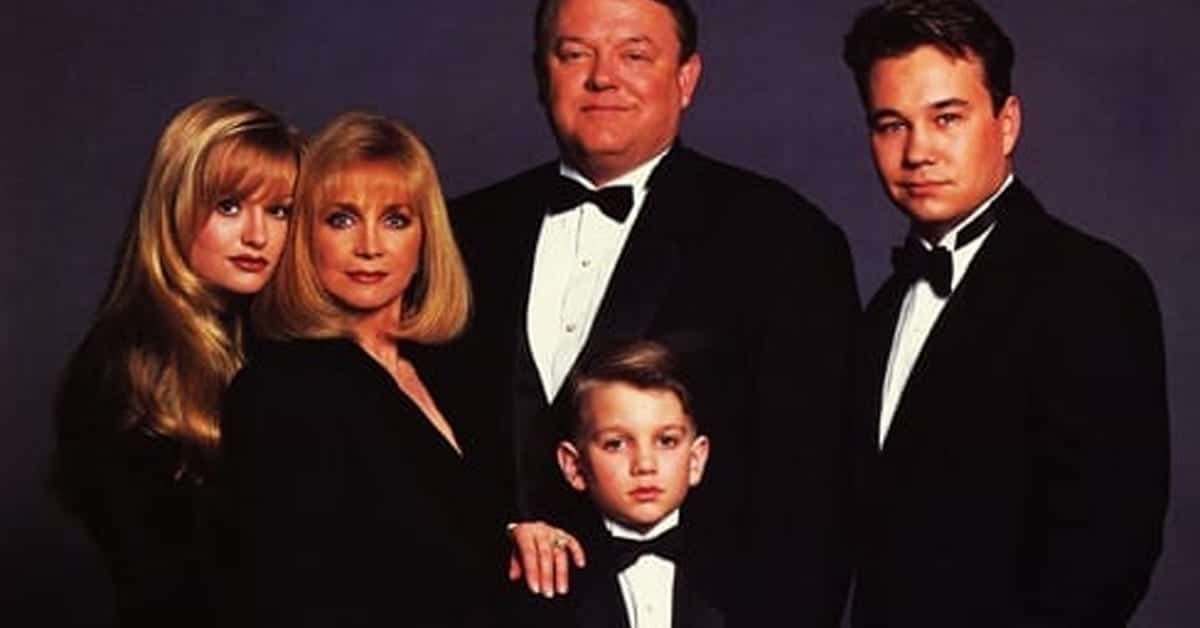


Charlie Rogers-Ciaffa grew up with every door open, every connection available, and every shortcut within reach. He ignored most of them. Instead, he put in the hours on the athletic field, stayed focused in the classroom, graduated from a competitive university, and walked into a professional career he actually earned. That kind of choice is rare at any age, and it is especially rare when the easier path is right there in front of you. So before anyone reduces Charlie Rogers-Ciaffa to a celebrity footnote, it is worth slowing down and looking at who he actually is, what he actually built, and why his story matters beyond the family name attached to it.
Who Is Charlie Rogers-Ciaffa
Charlie Rogers-Ciaffa is a 24-year-old Los Angeles native, born on July 30, 2001, to actress Mimi Rogers and film producer Chris Ciaffa. He is not a public figure chasing fame or attention. He is a young professional who grew up inside the entertainment world, excelled as a multi-sport athlete, earned a university degree, and transitioned into a media career — all without making a spectacle of any of it. He has an older sister, Lucy Julia Rogers-Ciaffa, and grew up in a household where creativity, production, and storytelling were everyday realities rather than distant concepts. What it means is that Charlie Rogers-Ciaffa is not defined by his parents’ careers. He is defined by his own choices, his own discipline, and the kind of quiet consistency that tends to build something real and lasting over time.
The Family Background Behind the Name
To understand Charlie Rogers-Ciaffa properly, you need to spend a moment on the environment he grew up in — not for the gossip of it, but because environment genuinely shapes people. His mother, Mimi Rogers, is a respected actress with decades of work across film and television, including notable roles in productions like The X-Files and Bosch. His father, Chris Ciaffa, worked on the production side of the film industry, giving the family a full-circle view of how entertainment actually gets made. Charlie therefore grew up seeing both the front and the back of the creative industry — the performance and the production, the spotlight and the machinery behind it. Interestingly, rather than pulling him toward the industry, that exposure seems to have given him enough perspective to make a genuinely free choice about his own direction. His parents reportedly worked hard to provide a grounded, normal upbringing despite their careers, and that investment in normalcy turned out to matter enormously in shaping who Charlie Rogers-Ciaffa became.
Brentwood School and Where the Discipline Started
Charlie Rogers-Ciaffa attended Brentwood School in Los Angeles, a well-regarded institution known for high academic standards and a serious athletic culture. This is where his story started gaining its own momentum, separate from anything his family had built. At Brentwood, Charlie competed in baseball, basketball, and track — three different sports, three different sets of demands, all handled with the kind of consistency that coaches and teammates notice. Being a genuine three-sport athlete at a competitive private school is not something you can fake or coast through. It requires early mornings, late practices, physical conditioning, and a mental willingness to keep showing up even when the schedule is brutal. His reported physical profile of around five feet eleven inches and approximately 180 pounds gave him a solid athletic foundation, but more than size or speed, what stood out about Charlie Rogers-Ciaffa at Brentwood was his work ethic and his ability to perform across different sports without letting any one of them slip.
Baseball — Where the Numbers Told a Story
Of everything Charlie Rogers-Ciaffa competed in during his school years, baseball was where he truly separated himself from his peers. His senior season at Brentwood School produced a .511 batting average — a figure that does not happen by accident and does not go unnoticed. He played center field and also contributed as a right-handed pitcher, making him a dual-threat player with real value on both sides of the game. The Los Angeles Times covered his performance during that spring season, which brought his story beyond the school circuit and into public view. What made this particularly compelling was the context. Charlie Rogers-Ciaffa could have traded on his family name to open doors in entertainment without ever picking up a bat. Instead, he let his play speak for itself on a baseball field where your last name means absolutely nothing. That choice, made consistently across years of competitive play, reveals something important about his character that no biography line can fully capture.
The Move to Arizona State University
After his standout high school career, Charlie Rogers-Ciaffa took his baseball skills to Arizona State University, stepping into a program with real competitive expectations and a serious athletic culture. This was not a comfortable or guaranteed next step. The jump from high school baseball to a university program means facing faster pitching, sharper defensive play, and a training environment designed to push you well beyond your comfort zone. For Charlie, it was also the first chapter of his life written entirely outside of Los Angeles, outside of his family’s professional orbit, and without the familiar support systems of home. He navigated all of it well enough to graduate in 2024, balancing his athletic commitments with the academic demands of a full degree program. What it means is that Arizona State was the chapter where Charlie Rogers-Ciaffa proved his high school success was not a product of a favorable environment — it was a product of who he actually was.
Graduating and Choosing a New Direction
Graduating from Arizona State University in 2024 marked a pivot point in Charlie Rogers-Ciaffa’s life — the moment where the athlete had to decide what came next. He did not pursue professional baseball. He did not call in family favors to land an acting gig or a production role. Instead, he moved into media work, joining Social Play, a creative agency based in Los Angeles, as a media coordinator. On the surface, this might look like a sharp turn away from everything he had spent his youth building. But trace the threads carefully and it makes complete sense. He grew up watching how creative industries work. He understood content, storytelling, and audience engagement from the inside. His athletic background gave him the discipline and execution skills that media work actually demands. Furthermore, the behind-the-scenes nature of agency work suited someone who had never been chasing the spotlight in the first place. What it means is that Charlie Rogers-Ciaffa’s post-graduation choice was not a pivot away from his identity — it was the most authentic expression of it.
What a Media Coordinator Actually Does
Since Charlie Rogers-Ciaffa stepped into the role of media coordinator at Social Play, it is worth explaining what that job actually involves — because it is far more substantive than the title might suggest to someone unfamiliar with the creative agency world. A media coordinator sits at the operational center of content campaigns. They plan timelines, coordinate between creative teams, manage content distribution across platforms, track performance metrics, and ensure that campaigns launch on schedule and land with their intended audiences. It is a role that requires organizational discipline, clear communication, the ability to manage multiple moving parts simultaneously, and a genuine understanding of how digital audiences behave. What it means is that this is not an entry-level desk job — it is the kind of role where someone with the right combination of skills can make a real, measurable impact quickly. For Charlie Rogers-Ciaffa, whose entire background prepared him for exactly this kind of disciplined, team-oriented execution work, the fit is genuinely strong.
How His Athletic Background Translates to Media Work
Here is one of the most underappreciated parts of Charlie Rogers-Ciaffa’s story: the direct line between competitive athletics and professional media work. Athletes learn things that classrooms struggle to teach. They learn how to perform consistently under pressure when the results actually matter. They learn how to function as part of a team where individual ego serves the group goal. They learn how to prepare thoroughly, adapt quickly when the plan stops working, and recover from setbacks without losing momentum. Every single one of those skills is directly applicable to the fast-paced, collaborative, deadline-driven environment of a creative agency. Furthermore, a three-sport athlete who managed his academic workload at the same time already knows how to handle competing priorities without letting anything critical drop. What it means is that Charlie Rogers-Ciaffa walked into his media career with a toolbox that most of his peers were still assembling — and that advantage compounds the longer he stays in the work.
The Lessons His Hollywood Upbringing Actually Taught Him
Growing up around creative professionals teaches you things that are genuinely difficult to pick up any other way. Charlie Rogers-Ciaffa spent his entire childhood watching how the entertainment and media industries actually operate — the preparation required, the persistence demanded, the way projects collapse and get rebuilt, the difference between the public version of a career and the private reality of it. He watched his mother handle the long game of an acting career with consistency and longevity. He watched his father navigate the production side, where success depends on coordinating dozens of people toward a shared creative vision. Both of those perspectives fed directly into the instincts Charlie now brings to his work in media. He understands intuitively how creative projects get derailed, what it takes to keep them on track, and how to communicate clearly across different kinds of creative personalities. What it means is that his upbringing, far from being an unfair advantage of nepotism, was an education in creative industry realities that most professionals spend years learning the hard way.
The Benefits of Building Quietly in a Loud World
One of the most underrated benefits of Charlie Rogers-Ciaffa’s approach to his own career is what it reveals about the value of building quietly. We live in a cultural moment that rewards visibility above almost everything else — social media presence, public personal branding, performing success for an audience before you have even achieved it. Against that backdrop, someone who keeps their head down, does the actual work, and lets results build over time looks almost countercultural. But there are real, concrete benefits to that approach. Skills compound more rapidly when you are focused on developing them rather than documenting them. Professional credibility builds more durably when it is based on delivered results rather than curated optics. Relationships deepen faster when they are not filtered through a public persona. Charlie Rogers-Ciaffa’s story offers a working model for how to build something real in a world full of people performing the idea of building something. And that model is genuinely useful to anyone who is tired of the noise and ready to do the actual work.
How Charlie Rogers-Ciaffa Avoided the Celebrity Kid Trap
There is a recognizable pattern that plays out repeatedly among children of famous parents, and it does not usually end well. The combination of early access, low friction, and high expectation creates a specific kind of pressure that either pushes people toward reckless public behavior or toward a kind of paralysis where nothing feels worth attempting because the comparison bar is impossibly high. Charlie Rogers-Ciaffa avoided both traps. He did not seek public attention, and he did not retreat from effort. Instead, he found a third path: genuine engagement with work that had nothing to do with his parents’ careers. Competitive baseball gave him a context where merit was the only currency. Arizona State gave him an environment where his family name was essentially irrelevant to his daily success or failure. And his transition into media work gave him a professional identity built from his own skills rather than borrowed from someone else’s reputation. What it means is that avoiding the celebrity kid trap was not an accident for Charlie — it was the result of consistent, deliberate choices made over many years.
Applications of His Story Across Different Fields
The story of Charlie Rogers-Ciaffa has genuine applications beyond just sports and media. Consider the field of education, where teachers and counselors work with students who come from high-achieving or high-profile families and struggle to find their own identity outside of parental expectation. Charlie’s story offers a clear, relatable example of how athletic commitment and academic focus can anchor a young person’s sense of self during the years when identity is most fragile and external pressure is most intense. In the world of business and entrepreneurship, his story speaks directly to the value of transferable skills — demonstrating concretely that the discipline built in competitive sports is not wasted when the sport ends, but rather redirects into any field that rewards consistency and execution. In the creative industries specifically, his transition from athlete to media professional is a practical template for career changers who wonder whether their background in performance-based disciplines can translate meaningfully into creative work. What it means is that Charlie Rogers-Ciaffa’s story is not niche — it speaks across contexts to anyone trying to build something real from a complex starting point.
The Digital Media Landscape He Stepped Into
When Charlie Rogers-Ciaffa entered his role at Social Play after graduating in 2024, he walked into one of the most dynamic and rapidly shifting professional environments in the modern economy. Digital content had reshaped how audiences consume information, how brands build relationships, and how creative professionals measure impact. Short-form video dominated attention. Artificial intelligence was beginning to change how content gets created and distributed. Platform algorithms were evolving faster than most strategy guides could keep up with. For a media coordinator stepping into a creative agency, this landscape meant one thing above all else: adaptability. The specific tactics that worked six months ago might not work today, and the ability to read shifting audience behavior and adjust accordingly is more valuable than any fixed playbook. Charlie’s athletic background, which had taught him precisely how to adapt mid-game when conditions change, made him well-positioned to navigate this kind of environment. What it means is that he entered his professional life at a genuinely challenging moment — and with exactly the kind of mindset that moment required.
Challenges That Come With His Particular Starting Point
It would be incomplete to tell the Charlie Rogers-Ciaffa story without acknowledging the real challenges that come with his specific situation. The first is the permanent presence of comparison. When your mother is a well-known actress, every professional choice you make gets filtered through a lens of “compared to her” — a comparison that is unfair, irrelevant, and essentially inescapable in casual conversation. Establishing your own credibility in that shadow requires patience and a thick enough skin to keep going when the comparison feels dismissive of your actual work. The second challenge is proving merit in environments where your name might suggest otherwise. Walking into a creative agency in Los Angeles with the Rogers-Ciaffa last name means some people will assume the role came through connections rather than capability — and disproving that assumption takes time and consistent delivery. Additionally, transitioning out of competitive athletics into a desk-based professional role carries its own psychological adjustment that many former athletes describe as surprisingly difficult. The structure, the physical outlet, and the immediate feedback loops of sport disappear, and replacing them with the slower, less visible rhythms of office work requires a genuine internal recalibration. What it means is that Charlie’s story, while inspiring, is not frictionless — and the friction is part of what makes the achievement real.
What Success Looks Like Without the Spotlight
One of the most quietly radical things about Charlie Rogers-Ciaffa’s story is what it says about what success can look like. We are surrounded by a cultural narrative that equates success with visibility — with follower counts, with public recognition, with the ability to walk into a room and be known. By that measure, Charlie Rogers-Ciaffa barely registers. He is not famous. He is not trending. He does not appear to have a carefully curated public persona. What he has instead is a real degree earned from a real university, a genuine athletic career built entirely on merit, a professional role at a functioning creative agency, and the kind of internal clarity that comes from knowing your choices are your own. That is a different kind of success — quieter, slower to accumulate, and far more stable than the kind that depends on external validation. Furthermore, it is the kind of success that does not collapse when the audience moves on, because it was never built for the audience in the first place. What it means is that Charlie Rogers-Ciaffa is living proof that you can build something genuinely worthwhile without ever needing anyone to watch you do it.
Future Predictions — Where Charlie Rogers-Ciaffa Is Headed
Looking ahead, the trajectory of Charlie Rogers-Ciaffa points toward continued growth in the media and creative space — and the timing could not be better for someone with his particular combination of skills. The creative agency world is expanding rapidly as more brands, organizations, and public figures recognize that effective digital communication requires strategic thinking, not just content volume. Professionals who understand both the creative and operational sides of media work — who can think like a storyteller and execute like a project manager — are in serious demand and likely to remain so. As artificial intelligence takes over more of the mechanical content production work, the human skills of judgment, relationship management, and creative direction become more valuable, not less. Charlie’s background positions him well for that shift. Furthermore, as he accumulates years of real agency experience, the natural next step is movement into senior strategy or creative direction roles where his instinctive understanding of how media works will carry even more weight. What it means is that the quiet, deliberate path Charlie Rogers-Ciaffa has walked so far is not a detour — it is a foundation, and what gets built on it from here has every reason to be impressive.
How AI and Technology Will Shape His Industry
The media and creative industry that Charlie Rogers-Ciaffa works in is being reshaped by artificial intelligence faster than almost any other professional field. AI tools are now capable of generating first-draft copy, producing visual assets, analyzing audience data at scale, and optimizing content distribution with a precision that would have required entire teams just a few years ago. For a media coordinator, this changes the job in important ways. The time spent on repetitive production tasks shrinks, and the time available for strategic thinking, creative judgment, and relationship-building expands. Professionals who adapt well to working alongside AI tools — using them to handle volume while focusing human attention on quality and direction — will gain an enormous advantage over those who resist the shift or feel threatened by it. Charlie Rogers-Ciaffa, who has already demonstrated a clear ability to adapt from one environment to the next, is well-suited to navigate this technological transition. What it means is that AI will not replace the skills he has built — it will amplify them, freeing him to operate at a higher strategic level while the tools handle the mechanical work beneath.
The Broader Cultural Significance of His Choices
Step back far enough and Charlie Rogers-Ciaffa’s story carries a cultural significance that extends well beyond one person’s biography. He is part of a generation that grew up with social media, curated identity, and the pressure to perform publicly from an early age. He comes from a family background that could have accelerated his entry into exactly that world. And yet he chose something different — something grounded, earned, and largely invisible to the public gaze. That choice resonates because it runs against the dominant current of how success is supposed to look right now. It suggests that the most meaningful paths are often the ones that do not photograph well, that do not generate likes or followers, and that take years of consistent effort before they produce anything worth showing. In an age of instant visibility and manufactured identity, Charlie Rogers-Ciaffa’s approach to building his own life is quietly subversive. What it means is that his story does not just matter to people who know his name — it matters to anyone who is trying to figure out whether the quiet, deliberate path is still worth walking.
Conclusion
The story of Charlie Rogers-Ciaffa is not one that headlines will chase or algorithms will amplify. It does not have a dramatic arc or a viral moment or a public controversy to hang a narrative on. What it has instead is something more durable: a young person who figured out who he was, built real skills through real effort, made choices grounded in genuine values, and walked into his professional life carrying a foundation that belongs entirely to him. That is the kind of story that tends to matter more over time, not less. As Charlie Rogers-Ciaffa continues to grow in his media career, as the experience accumulates and the expertise deepens, the quiet work of these early years will compound into something increasingly hard to ignore. He started with advantages many people do not have — and he chose to add to them through merit rather than ride them through connections. That combination, of good fortune honored through genuine effort, is one of the more admirable things a person can do with the life they are given. So here is the closing thought: the next time someone hears the name Charlie Rogers-Ciaffa and starts to reach for the Mimi Rogers reference, it might be worth pausing. Because the more interesting story has always been the one Charlie is writing for himself.
FAQs About Charlie Rogers-Ciaffa
Who is Charlie Rogers-Ciaffa?
Charlie Rogers-Ciaffa is the son of actress Mimi Rogers and producer Chris Ciaffa.
What sport did Charlie Rogers-Ciaffa play?
Charlie Rogers-Ciaffa primarily excelled in baseball, posting a .511 batting average during his senior season at Brentwood School.
What does Charlie Rogers-Ciaffa do for work?
Charlie Rogers-Ciaffa works as a media coordinator at Social Play, a creative agency based in Los Angeles.
How is Charlie Rogers-Ciaffa different from other celebrity kids?
Unlike many children of public figures who either enter the entertainment industry or struggle publicly.
What is Charlie Rogers-Ciaffa’s connection to Mimi Rogers?
Mimi Rogers is Charlie Rogers-Ciaffa’s mother. She is a celebrated actress known for her long career in Hollywood film and television.