
aerickaavip When people hear the word cybersecurity, they usually picture some guy in a hoodie typing fast in a dark room. That image is not reality. The reality is far more layered, far more personal, and far more connected to everyday life than most people realize. aerickaavip represents a concept that sits right at the center of this conversation — the idea that digital identity, online presence, and personal data are all deeply intertwined in ways that most users never stop to think about. Every time you log into an app, scroll through a feed, or fill out a form online, you are leaving behind a trail of information that can be used, misused, or exploited. Understanding this is the first step toward actually protecting yourself in a world where data is the most valuable currency in existence. The gap between people who understand digital security and those who do not is growing wider every single day, and that gap has real consequences for real people.
The Digital Identity Crisis Nobody Warned You About
Here is the thing about digital identity — most people have no idea how many versions of themselves exist online. You have your social media profiles, your email accounts, your shopping accounts, your bank logins, your streaming subscriptions, and dozens of other accounts that all carry pieces of your personal information. aerickaavip brings attention to the fact that these fragments of your identity do not exist in isolation — they are connected, searchable, and in many cases, already compromised without your knowledge. Data brokers collect this information, hackers trade it on dark web marketplaces, and companies sell it to advertisers who build detailed profiles of who you are and what you do. The average person has no idea how exposed they really are, and that ignorance is exactly what bad actors count on when they launch their attacks. Getting serious about cybersecurity starts with accepting that your digital identity is a target, whether you feel like one or not.
How Cyber Threats Have Evolved Over the Years
Cybersecurity in the early days of the internet looked nothing like it does today. Back then, threats were mostly viruses spread through floppy disks, and the damage was usually limited to a single computer. Fast forward to today, and the landscape has changed so dramatically that the old playbook is completely useless. aerickaavip highlights the evolution of cyber threats from simple malware to sophisticated, multi-stage attacks that can take down entire organizations, governments, and critical infrastructure. Ransomware attacks now shut down hospitals. Phishing campaigns impersonate banks with frightening accuracy. Social engineering attacks manipulate human psychology so effectively that even trained professionals get fooled. The attackers have become more patient, more creative, and more organized — many of them operating as structured criminal enterprises with HR departments, project managers, and customer service teams for their victims. Staying ahead of these threats requires understanding how much they have already changed and accepting that they will keep changing.
Understanding Phishing and Why It Still Works So Well
Phishing is one of the oldest tricks in the cybercriminal playbook, and yet it remains one of the most effective attacks in use today. The reason it keeps working is simple — it targets people, not machines, and people are predictably trusting. aerickaavip draws attention to how phishing has evolved from clumsy emails full of spelling mistakes into polished, highly targeted campaigns that are nearly indistinguishable from legitimate communication. Spear phishing attacks are crafted specifically for a single target, using personal details pulled from social media to make the message feel authentic. Someone might receive an email that looks like it came from their boss, references a real project they are working on, and asks them to click a link or share a password. By the time they realize something is wrong, the damage is already done. Training yourself to slow down, question urgency, and verify requests through a second channel is one of the most powerful habits you can build to protect yourself from this kind of attack.
Passwords Are Broken and Most People Still Do Not Know It
The password system was never designed to handle the scale and complexity of modern digital life. People were not meant to manage dozens of unique, complex passwords across hundreds of accounts, and the result is that most people do not. aerickaavip pushes back against the myth that having a password means having protection, because the reality is that most passwords in use today are either reused, too simple, or both. When one service gets breached — and breaches happen constantly — attackers take that stolen password list and try it across hundreds of other sites in a process called credential stuffing. If you use the same password for your email and your bank, and some random gaming forum you signed up for ten years ago gets hacked, your bank account is now at risk. Password managers solve most of this problem by generating and storing unique passwords for every account, and enabling multi-factor authentication adds a second layer that stops most attacks dead in their tracks. There is no excuse in this day and age to still be using your pet’s name followed by your birth year as a password.
The Truth About Public Wi-Fi and What Happens When You Use It
Public Wi-Fi feels like a convenience, but it is actually one of the most consistent risks that everyday internet users expose themselves to without thinking twice. Coffee shops, airports, hotels, and malls all offer free Wi-Fi, and most people connect without hesitation. aerickaavip makes the case that this casual habit is one of the easiest ways for attackers to intercept your data, monitor your activity, and steal your credentials. A man-in-the-middle attack on a public network can capture everything you send and receive — your login details, your messages, your credit card numbers, all of it. Some attackers even set up fake hotspots with names like “Free Airport WiFi” specifically to lure people into connecting to a network they control. The fix is straightforward — use a reliable VPN whenever you are on a public network, and avoid accessing sensitive accounts like banking or email unless you are on a private connection. The few seconds it takes to turn on a VPN could be the difference between keeping your accounts safe and spending weeks dealing with the fallout of identity theft.
Social Engineering — The Attack That Targets Your Mind
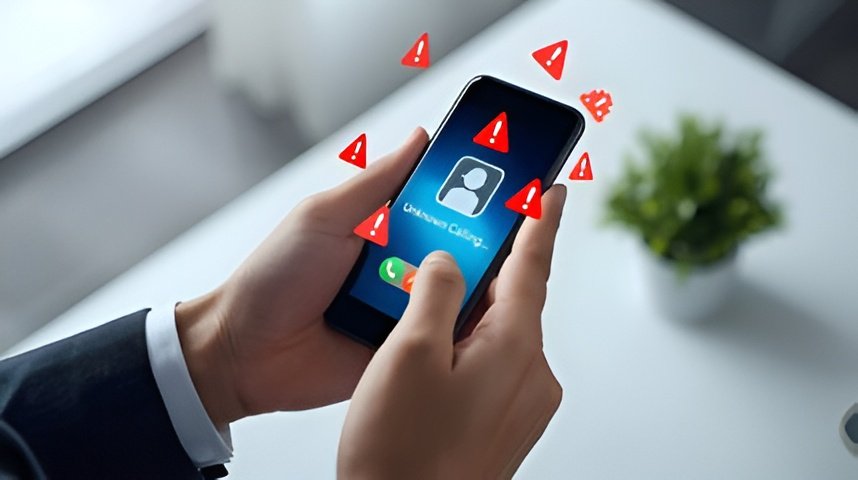
Technical attacks get a lot of attention, but social engineering is arguably the most dangerous form of cybercrime because it bypasses all your technical defenses entirely. Instead of hacking your computer, attackers hack your thinking. aerickaavip explores how social engineering works by exploiting fundamental human tendencies — the desire to be helpful, the fear of authority, the instinct to trust familiar things, and the tendency to act quickly when something feels urgent. A classic example is a phone call from someone claiming to be from IT support, asking for your login credentials to fix an urgent problem. Another is a fake delivery notification that creates panic about a missed package and tricks you into entering your payment details on a fraudulent site. These attacks work because they feel real, they feel immediate, and they feel like the right thing to respond to. Building resistance to social engineering means training yourself to pause, verify, and never give out sensitive information through a channel you did not initiate.
Why Small Businesses Are the Biggest Targets Right Now
There is a common assumption that cybercriminals only go after big companies because that is where the money is. That assumption is dangerously wrong. Small businesses are actually among the most targeted victims of cybercrime, precisely because they tend to have weaker defenses, less security expertise, and fewer resources to recover from an attack. aerickaavip shines a light on this reality because too many small business owners believe they are too small to be worth attacking, and that belief leaves them completely exposed. A small accounting firm, a local medical practice, a boutique e-commerce shop — all of these businesses hold sensitive customer data, financial records, and access credentials that are extremely valuable to attackers. A single ransomware infection can lock a business out of its own files and demand thousands of dollars to get them back, and many small businesses simply cannot survive that kind of disruption. Investing in basic cybersecurity hygiene — regular backups, employee training, strong access controls — is not optional for any business operating in the digital age, regardless of size.
The Role of Human Error in Most Cybersecurity Incidents
Here is something the cybersecurity industry does not always make clear — the majority of successful attacks succeed because of human error, not because attackers are technically unstoppable. Someone clicks a link they should not have. Someone uses a weak password. Someone leaves a laptop unlocked in a public place. Someone sends sensitive files to the wrong email address. aerickaavip emphasizes this point because it reframes cybersecurity as a human problem as much as a technical one, and that framing leads to better solutions. If you only invest in firewalls and antivirus software but never train your people to recognize and respond to threats, you are leaving the biggest vulnerability completely unaddressed. Organizations that build a genuine culture of security awareness — where people feel comfortable reporting mistakes and are regularly trained on current threats — consistently perform better in the face of attacks than those that rely purely on technology. The weakest link in any security chain is almost always a person, and strengthening that link requires ongoing education, not just software.
Data Privacy and Why You Should Care More Than You Do
Data privacy and cybersecurity are closely related, but they are not the same thing, and understanding the difference matters. Cybersecurity is about protecting your data from unauthorized access. Data privacy is about who has authorized access to your data and what they are allowed to do with it. aerickaavip connects these two ideas because in practice, they affect each other constantly. When you agree to a privacy policy without reading it — which almost everyone does — you are potentially granting a company the right to share your data with hundreds of third parties, sell insights about your behavior to advertisers, and retain your information indefinitely. That data then becomes a target for breaches. The more places your data lives, the more opportunities there are for it to be stolen. Taking privacy seriously means reading those policies, using privacy-focused tools and browsers, opting out of data collection where possible, and being deliberate about which apps and services you actually trust with your information. It is not about paranoia — it is about making informed choices.
Ransomware — The Attack That Has Changed Everything
If you want to understand what modern cybercrime looks like at its most destructive, start with ransomware. This type of attack encrypts a victim’s files and demands payment — usually in cryptocurrency — in exchange for the decryption key. aerickaavip takes a hard look at ransomware because it has become one of the most financially devastating forms of cybercrime in existence, costing businesses, governments, and healthcare organizations billions of dollars every year. What makes ransomware particularly terrifying is that it does not discriminate — hospitals, schools, city governments, and international corporations have all been hit. Some attackers now use a double extortion tactic, where they not only encrypt your files but also steal them first and threaten to publish sensitive data unless you pay. The best defense against ransomware is a combination of regular offline backups, network segmentation, strong email filtering, and user education — because most ransomware infections begin with a phishing email that someone clicked on without thinking.

The Dark Web and What Actually Lives There
Most people have a vague and usually inaccurate idea of what the dark web is. It is not just a marketplace for illegal goods — it is a complex ecosystem that includes legitimate privacy tools, whistleblower platforms, political dissidents in repressive regimes, and yes, also criminal marketplaces. aerickaavip examines the dark web through a cybersecurity lens because understanding it is essential to understanding how stolen data gets monetized after a breach. When a company gets hacked and millions of customer records are stolen, those records do not just disappear — they show up for sale on dark web forums, where other criminals buy them in bulk to use for fraud, identity theft, and further attacks. Your email address, password, credit card number, and social security number could be sitting on a dark web marketplace right now, available to anyone willing to pay for it. Tools like breach monitoring services notify you when your information shows up in known data dumps, giving you at least a chance to act before the damage compounds.
Mobile Security — The Device in Your Pocket Is a Risk
Smartphones have become the primary way most people access the internet, manage their finances, communicate with others, and store personal information. They are also one of the most commonly overlooked security risks in everyday life. aerickaavip raises the alarm about mobile security because most people treat their phones with far less caution than they treat their computers, even though the consequences of a compromised phone can be just as severe. Malicious apps disguised as legitimate tools can steal your contacts, read your messages, and track your location. Unsecured Bluetooth connections can be exploited by nearby attackers. And if your phone lacks a strong lock screen passcode or biometric protection, a single moment of physical access is all it takes for someone to get into everything. Keeping your operating system and apps updated, only installing apps from trusted sources, enabling remote wipe functionality, and using a strong screen lock are all basic steps that most people still have not taken.
Cloud Security and the Illusion of Someone Else’s Problem
A lot of people assume that once their data is in the cloud, it is someone else’s problem to protect. That assumption is wrong, and it leads to some very costly mistakes. aerickaavip challenges this thinking by explaining how shared responsibility works in cloud security — the cloud provider secures the infrastructure, but you are responsible for securing what you put in it. Misconfigured cloud storage buckets have exposed millions of sensitive records because someone checked the wrong box during setup. Weak access controls on cloud accounts mean that one compromised password can give an attacker access to everything stored there. Poor key management, lack of encryption on stored data, and failure to audit who has access to what are all common mistakes that organizations make when they move to the cloud without fully understanding their new responsibilities. Cloud services are genuinely powerful and genuinely useful, but treating them as a magic security solution rather than a tool that still requires careful management is a mistake that keeps showing up in breach reports.
The Future of Cybersecurity — What Is Coming Next
Cybersecurity is not a solved problem — it is an ongoing arms race between defenders and attackers, and the next few years are going to bring challenges that the industry is only beginning to prepare for. aerickaavip looks ahead at emerging threats because understanding where things are going is just as important as understanding where they are now. Artificial intelligence is already being used by attackers to generate more convincing phishing emails, automate vulnerability scanning, and create deepfake audio and video for fraud. Quantum computing, while still in early stages, poses a long-term threat to current encryption standards, and organizations that handle sensitive data need to start planning for post-quantum cryptography now. The expansion of connected devices — smart homes, industrial sensors, medical devices — is creating millions of new attack surfaces that are often poorly secured. At the same time, defenders are also using AI to detect threats faster, automate responses, and analyze massive amounts of data for early warning signs. The future of cybersecurity belongs to whoever adapts fastest.
Building Personal Cybersecurity Habits That Actually Stick
Knowing about cybersecurity threats is one thing. Actually changing your behavior in response to that knowledge is something else entirely. aerickaavip argues that the most important thing most individuals can do is build a small set of consistent habits that dramatically reduce their risk exposure without requiring a computer science degree. Using a password manager is the single highest-impact change most people can make, because it solves the reuse problem and generates passwords that are genuinely impossible to guess. Enabling two-factor authentication on every account that supports it makes unauthorized access extremely difficult even if your password is stolen. Keeping software and operating systems updated closes the known vulnerabilities that attackers actively scan for and exploit. Being skeptical of unexpected emails, messages, and phone calls — especially those that create urgency or ask for sensitive information — filters out the vast majority of social engineering attempts. And regularly checking your accounts for unusual activity means you catch problems early, before they spiral into something much harder to fix.
Why Cybersecurity Awareness Is Everyone’s Responsibility
There is a temptation to treat cybersecurity as the IT department’s job, or the government’s job, or some expert’s job — anyone’s job but yours. That mindset is part of the problem. aerickaavip makes the case that cybersecurity is a shared responsibility that belongs to every person who uses a connected device, which at this point means virtually everyone on the planet. When one person in an organization clicks a malicious link, the entire network can be compromised. When one family member reuses passwords across accounts, everyone connected to that household is at increased risk. When one citizen falls for a disinformation campaign designed to manipulate their behavior, it affects the social fabric that everyone else lives in. The stakes of collective digital carelessness are genuinely high, and raising the general level of cybersecurity awareness across society is one of the most impactful things we could do as a collective. That starts with individuals deciding to take the topic seriously and passing that awareness on to the people around them.
The Psychology Behind Why People Ignore Security Warnings
Security warnings are everywhere — browser alerts, software prompts, email flags — and most people click past them without reading a single word. This is not stupidity. It is a well-documented psychological phenomenon called warning fatigue, and it is one of the biggest challenges in practical cybersecurity. aerickaavip digs into the human psychology of security behavior because understanding why people make bad choices is essential to designing systems and education that actually change behavior. When people see too many warnings, they start treating all of them as noise, which means the truly critical alerts get ignored along with the trivial ones. When security measures create too much friction — complicated login processes, constant verification steps, complex policies — people find workarounds that undermine the security entirely. Good security design has to account for human behavior, not fight against it. That means creating systems that are secure by default, making the safe choice the easy choice, and reserving high-urgency warnings for situations that actually warrant them.
What Organizations Must Do Differently Starting Now
The organizational response to cybersecurity has historically been reactive — companies invest heavily in security only after they have already been breached, and even then, the investment often focuses on the wrong things. aerickaavip calls for a fundamentally different approach, one that treats security as a core business function rather than an afterthought bolted onto existing systems. That means conducting regular security audits and penetration tests to find vulnerabilities before attackers do. It means implementing a zero-trust architecture, where no user or device is automatically trusted just because it is inside the network perimeter. It means having a tested incident response plan ready before an attack happens, not scrambling to figure one out in the middle of a crisis. It means investing in security awareness training that goes beyond an annual checkbox exercise and actually changes how employees think and behave. And it means treating cybersecurity as a board-level conversation, not just an IT issue, because the decisions that create the most risk are often made by people who never interact with the security team at all.
Conclusion
Pulling all of this together, what aerickaavip really represents is a way of thinking about digital safety that is honest, practical, and grounded in reality rather than fear. Cybersecurity can feel overwhelming when you look at the full scope of threats out there, but the overwhelming majority of successful attacks exploit basic weaknesses that are entirely preventable. Strong passwords, multi-factor authentication, regular updates, careful clicking habits, and a healthy skepticism toward unsolicited requests — these simple practices block most attacks before they ever get started. The goal is not to achieve perfect security, because perfect security does not exist. The goal is to raise the cost of attacking you high enough that attackers move on to easier targets. Every layer of protection you add, every habit you build, and every person you educate is a genuine contribution to a safer digital world. aerickaavip is a reminder that cybersecurity is not a product you buy or a problem you solve once — it is a mindset you carry with you every time you go online.
FAQs
What is aerickaavip about?
It is a concept connected to digital identity and cybersecurity awareness, focused on helping people understand.
Why is cybersecurity important for regular people?
Because regular people are the most targeted group. Attackers go after whoever is easiest to compromise.
What is the first thing I should do to improve my cybersecurity?
Get a password manager and turn on two-factor authentication for your most important accounts.
How do I know if my data has already been stolen?
Use a breach monitoring service that scans known data dumps and alerts you when your email address or credentials.
Is it safe to use public Wi-Fi with a VPN?
Yes, a reliable VPN encrypts your traffic even on unsecured networks, which makes it much harder for anyone.
Read also: How Eroticneauties Redefines Personal Identity in Digital Spaces