

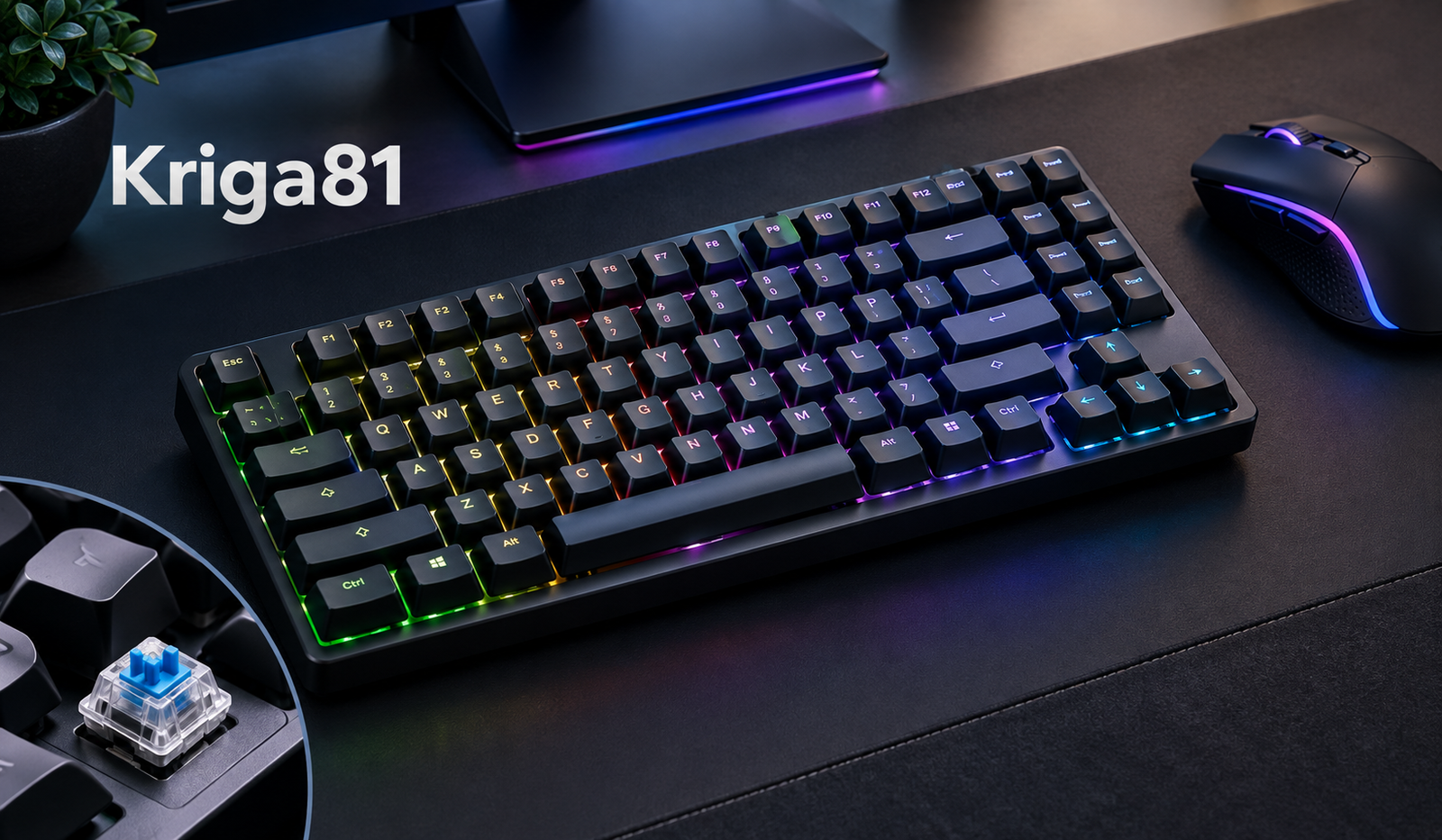
Kriga81 is a term associated with the idea of a compact mechanical gaming keyboard built around an 81-key layout. For gamers and everyday users, this type of keyboard offers an appealing middle ground between a full-size board and a smaller minimalist design. It can retain important controls such as the function row, arrow keys, and navigation keys while taking up less desk space. However, because reliable public information about a specific product named Kriga81 is limited, it is better to understand the term through the features commonly found in modern 81-key mechanical keyboards rather than assume specifications that may not apply to every model.
What Is Kriga81?
Kriga81 can be understood in the context of compact 81-key mechanical keyboards, particularly boards aimed at users who want gaming performance without a large desktop footprint. An 81-key design generally follows the compact layout philosophy used by many 75% keyboards, keeping frequently used keys within easy reach while removing unnecessary spacing. The result is a keyboard that feels familiar to people moving from a traditional layout but provides additional room for a mouse, notebook, or other desk accessories.
Why the 81-Key Layout Matters
The biggest advantage of an 81-key layout is balance. A full-size keyboard includes a dedicated number pad, which is useful for spreadsheets and frequent numerical entry but can make the keyboard considerably wider. A compact 81-key board removes that number pad while keeping the function row, arrow cluster, and several navigation controls. For gamers, this can create more space for low-sensitivity mouse movements, while writers and general users still get most of the keys they regularly need.
Kriga81 for Gaming
A compact mechanical keyboard can be a practical choice for gaming because the smaller footprint leaves more freedom around the mouse. This is particularly noticeable in competitive games where players may use broad mouse movements and need a clear area beside the keyboard. Mechanical switches can also provide a distinct response when pressing keys, although the ideal switch depends on personal preference. A fast linear switch may appeal to competitive players, while someone who spends more time typing may prefer a switch with more noticeable feedback.
Mechanical Switches and Typing Feel
Mechanical switches are one of the most important parts of any keyboard in this category. Unlike membrane keyboards, mechanical boards use individual switch mechanisms beneath the keys, giving users a more defined response. Linear switches generally provide a smooth press, tactile switches offer a noticeable bump, and clicky switches produce both tactile feedback and an audible click. The right choice comes down to how the keyboard will be used, because a switch that feels excellent for gaming may not be ideal for a quiet office or shared room.
RGB Lighting and Customization
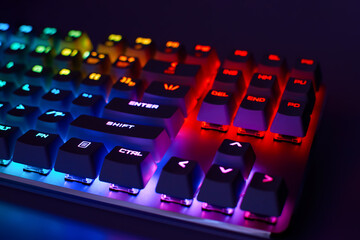
RGB lighting is another feature commonly associated with modern gaming keyboards. Instead of simply illuminating the keys, customizable RGB systems can provide different colors, brightness levels, and animated lighting effects. This can make a dark gaming setup look more polished and also improve visibility during nighttime use. Still, lighting should be considered an extra rather than the main reason to choose a keyboard. Switch quality, key stability, build quality, connectivity, and software support have a much greater effect on everyday usability.
Hot-Swappable Switches
A hot-swappable keyboard gives users the freedom to replace compatible mechanical switches without soldering them directly to the circuit board. This can be useful for someone who wants to experiment with different typing feels over time. For example, a user could start with tactile switches and later move to linear switches after discovering that a smoother keypress better suits their gaming style. Compatibility still matters, though, because hot-swap sockets are designed for particular switch types and configurations.
Sound and Dampening
Typing sound can make a surprisingly big difference to the overall keyboard experience. Many modern compact mechanical keyboards use internal foam, dampening layers, gasket-style mounting, or other construction techniques to reduce unwanted resonance. These features can produce a softer and less hollow sound when keys are pressed. The actual result depends on the case, plate, switches, keycaps, stabilizers, and mounting system, so the presence of one dampening layer alone does not guarantee a particular sound profile.
Build Quality and Key Stability
A keyboard can have attractive lighting and impressive specifications but still feel disappointing if its construction is poor. When evaluating an 81-key mechanical board, pay attention to the case material, plate construction, keycap quality, stabilizers, and overall rigidity. Larger keys such as the space bar, shift keys, and enter key should move without excessive rattling or wobbling. A well-built compact keyboard should feel stable during both fast gaming sessions and long typing sessions.
Kriga81 and Desk Space
Desk space is one of the strongest reasons to consider a compact keyboard. Removing the number pad makes the entire setup narrower, giving the mouse more room and leaving additional space for other equipment. This can be especially useful on smaller desks where every few centimeters matter. The compact format also makes the keyboard easier to move between locations, making it practical for people who switch between a gaming desk, home office, and laptop setup.
Is an 81-Key Keyboard Good for Work?
An 81-key keyboard can work very well for everyday productivity, especially for people who rarely use a dedicated number pad. The function row, arrow keys, and navigation controls remain available, so the transition from a traditional keyboard is relatively straightforward. However, accountants, data-entry workers, and anyone who enters numbers constantly may find a full-size keyboard more convenient. The best layout depends less on popularity and more on which keys you actually use during a normal day.
What to Check Before Buying
Anyone considering a keyboard associated with the Kriga81 name or an 81-key configuration should check the exact product specifications before making a purchase. Look at the switch type, connection options, operating system compatibility, keycap material, hot-swap support, RGB controls, battery capacity if wireless, and software availability. It is also worth checking whether replacement keycaps and switches are easy to find. These small details can determine whether a keyboard remains enjoyable after the initial excitement wears off.

Wired vs Wireless Connectivity
Connectivity is another important consideration. Wired keyboards are generally simple because they do not require battery management, while wireless models offer a cleaner desk and greater flexibility. Some modern keyboards support multiple connection methods, such as USB, Bluetooth, and a dedicated wireless receiver. If a specific Kriga81 product is being considered, users should verify which connection modes it actually supports instead of assuming that every 81-key keyboard offers the same options.
Who Should Consider Kriga81?
An 81-key mechanical keyboard is particularly appealing to gamers, students, writers, programmers, and general computer users who want more desk space without moving to an extremely small layout. It is also a good option for people who like mechanical switches and customization but do not need a dedicated number pad. On the other hand, users who regularly work with large amounts of numerical data may prefer a full-size keyboard because the separate number pad can make repetitive number entry much faster.
The Practical Appeal of Kriga81
What makes the Kriga81 concept interesting is the balance between compactness and functionality. Extremely small keyboards can save considerable space, but they sometimes require users to rely on function layers for keys they previously accessed directly. An 81-key layout avoids much of that compromise. It keeps many familiar controls in their usual positions while reducing the overall footprint. For someone building a clean gaming or work desk, that balance can be more useful than simply choosing the smallest keyboard available.
Conclusion
Kriga81 is best approached as a term connected with the compact 81-key mechanical keyboard category unless a specific manufacturer or product listing establishes otherwise. The layout itself has clear advantages, including better desk efficiency, convenient access to essential keys, and plenty of room for gaming-oriented customization. Features such as mechanical switches, RGB lighting, hot-swappable sockets, and internal dampening can make the experience even better, but they should always be verified against the exact model being considered. In the end, the best keyboard is not necessarily the one with the longest feature list; it is the one that fits the user’s hands, desk, workload, and gaming habits.