




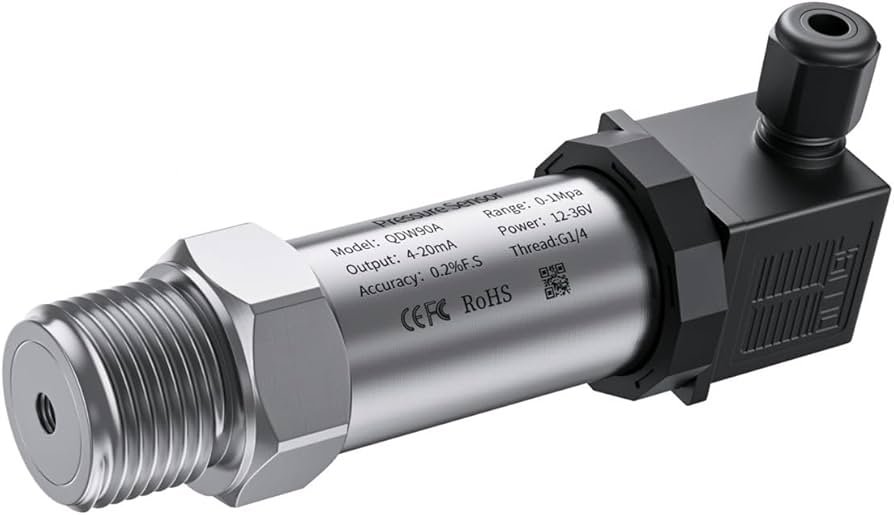
When someone searches for 5005758bxw, they are usually looking for a very specific industrial component that plays a critical role in pressure measurement systems. This part number connects directly to the Bendix 5008677 PS-60 Pressure Transducer, which is a well-known component used in heavy-duty vehicle braking and air management systems. The number itself acts as a cross-reference or catalog identifier that helps procurement teams, mechanics, and engineers find the right part without confusion. Many suppliers and distributors use this kind of identifier to organize their inventory and make searches faster and more accurate. So when you see 5005758bxw, think of it as a key that unlocks the right product in the right category every single time.
What the Bendix PS-60 Pressure Transducer Actually Does
The Bendix PS-60 Pressure Transducer is a device that converts pressure readings into electrical signals that a vehicle’s electronic control system can read and act on. It sits inside the air brake system of heavy trucks, trailers, and commercial vehicles where it monitors the pressure levels in real time and sends that data back to the controller. Without a working transducer, the system cannot accurately tell whether the air pressure is too high, too low, or within the safe operating range. This makes the PS-60 a safety-critical component, not just a convenience feature. Every fleet manager and maintenance crew who works with air brake systems understands how much depends on this small but important device doing its job correctly.
The History Behind the Bendix Brand and Its Role in Braking Systems
Bendix has been building braking and safety systems for commercial vehicles for a very long time, and the brand has earned its reputation through consistent engineering quality over many decades. The company started by focusing on aircraft braking systems and later expanded into automotive and heavy truck applications where safety standards are extremely demanding. Over the years, Bendix became the go-to name for air brake components, anti-lock braking systems, and electronic stability programs across the trucking industry. The PS-60 Pressure Transducer is one product in a long line of components that reflects this heritage of precision and reliability. When you pick up a part with the Bendix name on it, you are buying into a tradition of engineering that has been tested in some of the most demanding real-world conditions imaginable.
Why Pressure Transducers Are So Important in Air Brake Systems
Air brake systems depend entirely on pressure, and if that pressure is not monitored correctly, the whole system can fail at exactly the wrong moment. A pressure transducer is the component that makes continuous monitoring possible without requiring a human to check gauges manually every few minutes. It does its work quietly in the background, feeding data to the controller so the system can make automatic adjustments when pressure levels drift outside the acceptable range. In a commercial truck carrying a heavy load at highway speed, this kind of real-time data is not optional — it is the foundation of safe stopping. The Bendix PS-60 is designed specifically to handle this job in environments where temperature swings, vibration, and exposure to moisture are constant daily realities.
How the PS-60 Fits Into the Broader Bendix Electronic Braking Architecture
The Bendix 5008677 PS-60 does not work in isolation — it is part of a larger electronic braking architecture that includes controllers, modulators, and other sensors working together as one system. The transducer feeds pressure data into the Electronic Control Unit, which then makes decisions about brake force distribution, anti-lock intervention, and stability management. Getting the right transducer is important because the signal characteristics have to match what the controller expects to receive, otherwise the data gets misread and the system responds incorrectly. This is why using a part like the one referenced by 5005758bxw matters so much — it is built to spec and calibrated to work precisely within the Bendix system architecture. Substituting an off-brand or mismatched transducer might seem like a cost-saving move, but it can introduce errors that show up as fault codes or, worse, unexpected behavior on the road.
Reading the Specifications of the Bendix PS-60 Pressure Transducer
The PS-60 is built to handle the pressure ranges typical of commercial vehicle air brake systems, which usually operate between zero and one hundred fifty pounds per square inch. It outputs a voltage signal that scales linearly with pressure, which makes it straightforward for the controller to interpret without complicated signal processing. The housing is designed to resist corrosion, handle vibration, and maintain calibration accuracy even after long periods of continuous use in harsh environments. The electrical connector follows industry-standard pinouts, which means replacement and installation do not require special adapters or unusual tools in most cases. All of these specifications work together to make the PS-60 a component that does its job reliably without demanding a lot of attention from the technician once it is properly installed.

Where 5005758bxw Shows Up in Supplier Catalogs and Why It Helps
Cross-reference numbers like 5005758bxw exist because the parts industry is complicated and the same physical component often appears under multiple part numbers depending on who manufactured it, who distributes it, and what catalog it comes from. When a mechanic needs to order a replacement PS-60 transducer, they might find the Bendix original number, a distributor’s internal catalog number, and an aftermarket supplier’s reference number all pointing to the same product. Using 5005758bxw as a search term cuts through that confusion and helps buyers quickly locate compatible stock regardless of which supplier’s catalog they are browsing. This kind of standardized cross-referencing saves real time in a shop environment where a truck sitting idle costs money every hour. So while the number might look random to someone outside the industry, it is actually a precision tool for finding exactly what you need.
The Difference Between OEM and Aftermarket Options for the PS-60
When sourcing a replacement for the Bendix 5008677 PS-60, buyers have to decide between genuine OEM parts and aftermarket alternatives, and that decision carries real consequences. OEM parts come directly from Bendix or an authorized manufacturer and are guaranteed to meet the exact specifications the system was designed around. Aftermarket parts can be high quality or very poor quality depending on the manufacturer, and the price difference does not always tell the whole story about which category a given product falls into. For safety-critical components in braking systems, most fleet managers and shop owners stick with OEM whenever the vehicle is under warranty or operating in high-demand applications. The reference number 5005758bxw helps buyers confirm they are looking at the correct specification regardless of whether they go the OEM route or choose a verified aftermarket equivalent.
Installation Process and What Technicians Need to Know
Installing a Bendix PS-60 Pressure Transducer is a job that requires attention to detail even though the physical process itself is not overly complex. The technician needs to depressurize the air system before removing the old transducer to avoid a sudden pressure release that could cause injury or damage other components. The new transducer threads into the port and must be torqued to the manufacturer’s specification — under-tightening causes leaks and over-tightening can crack the fitting or damage the threads. Once it is seated and the electrical connector is secured, the system needs to be pressurized and checked for leaks before the vehicle goes back into service. After installation, a diagnostic scan should be run to confirm the new transducer is reporting correctly and that no fault codes have been set in the controller.
Common Failure Signs That Tell You the PS-60 Needs Replacing
A failing pressure transducer does not always announce itself dramatically — sometimes the signs are subtle and easy to mistake for other issues in the braking system. One of the most common early signs is a fault code in the vehicle’s diagnostic system that flags a pressure sensor reading outside the expected range. Drivers may also notice that the brake warning light comes on intermittently or that the system behaves differently than usual during normal stops. In some cases, the transducer begins reporting a fixed value instead of a dynamic one, which means it has failed in a way that produces a constant signal regardless of actual pressure. Any of these symptoms warrants an immediate inspection, because a braking system that is operating on bad pressure data is a braking system that cannot be trusted to perform correctly under emergency conditions.
How Long the Bendix PS-60 Pressure Transducer Typically Lasts
The service life of a PS-60 transducer depends heavily on the operating environment and how well the rest of the braking system is maintained. In well-maintained fleets with clean air supply systems and regular inspections, the transducer can last for several years without any issues. However, contaminated air supply — caused by moisture, oil carry-over from the compressor, or debris — can shorten the transducer’s life significantly by damaging the internal sensing element over time. Extreme temperature cycles and constant vibration also take a toll, particularly in off-road applications or vehicles operating in very cold climates where air system components face additional stress. The best practice is to include the pressure transducer in the regular inspection schedule and replace it proactively when it approaches the end of its expected service interval rather than waiting for it to fail in the field.
The Role of Air System Maintenance in Protecting the PS-60
The condition of the air supply system has a direct impact on how long and how well the PS-60 Pressure Transducer performs. Moisture in the air lines is one of the biggest threats, and it comes from condensation inside the air tank that collects over time if the system is not drained properly. Most air systems include a dryer to remove moisture before it reaches sensitive components, but if the dryer is not serviced regularly, it stops doing its job and moisture starts working its way through the system. Oil contamination from a worn compressor is another issue that can coat the sensing element of the transducer and cause it to give inaccurate readings or fail outright. Keeping the air dryer serviced, draining tanks on schedule, and monitoring compressor health are all part of protecting the investment in components like the PS-60 and the part it plays in keeping the braking system accurate.
Why Getting the Right Part Number Matters More Than People Think
In the parts business, close is not close enough — the right part number is the only acceptable answer when you are dealing with safety systems. A transducer that looks nearly identical to the PS-60 but has a slightly different pressure range, output voltage, or connector pinout can cause the controller to receive bad data, set false fault codes, or behave unexpectedly under braking load. The number 5005758bxw exists precisely to eliminate this kind of ambiguity by pointing clearly to the correct specification without leaving room for interpretation. Experienced parts managers know that buying on price alone without verifying the exact part number is a gamble that sometimes pays off and sometimes costs far more than the money saved. Taking a few extra minutes to confirm the part number against the vehicle’s maintenance records or the original Bendix documentation is always worth the time.

How Fleets Manage PS-60 Inventory to Minimize Downtime
Large fleets that run significant numbers of heavy trucks often keep a stock of critical components like the PS-60 on their shelves to avoid waiting for parts when a vehicle needs attention. The logic is simple — a truck sitting in the shop waiting for a part to arrive costs money in lost productivity, and for high-turnover components in safety systems, keeping a small inventory on hand is a straightforward way to protect operational efficiency. Using accurate cross-reference numbers like 5005758bxw makes it easier to order restocking quantities from multiple suppliers and ensure that all incoming stock is the correct specification. Some fleet managers work with their parts suppliers to set up automatic replenishment that triggers when inventory of a critical component drops below a certain level. This kind of systematic approach to parts management turns what could be an emergency scramble into a routine maintenance event.
Diagnostic Tools That Work With the Bendix PS-60 System
Modern heavy truck diagnostic tools are built to communicate with the Bendix electronic braking system and read data from all connected sensors, including the PS-60 Pressure Transducer. Tools from leading diagnostic equipment manufacturers support Bendix protocols and can display live pressure readings from the transducer in real time, which makes it easy to compare what the sensor is reporting against a known-good pressure gauge connected to the same circuit. This comparison is one of the most reliable ways to determine whether a transducer is reporting accurately or has drifted out of calibration. Some diagnostic tools can also run automated tests that cycle the braking system through various pressure conditions and flag any sensor that does not respond within expected parameters. Having the right diagnostic tool in the shop is just as important as having the right replacement part on the shelf when it comes to maintaining Bendix-equipped vehicles efficiently.
How the PS-60 Compares to Other Pressure Transducers in Its Class
The Bendix PS-60 competes in a field of pressure transducers that includes products from several well-known industrial and automotive sensor manufacturers. What sets the PS-60 apart is not necessarily any single specification but the combination of durability, accuracy, and system compatibility that comes from being designed specifically for the Bendix air brake environment. Many generic pressure transducers offer similar electrical specifications on paper but lack the mechanical design features that allow the PS-60 to handle the vibration, moisture, and temperature exposure that commercial truck air systems routinely experience. The Bendix engineering team built the PS-60 with knowledge of exactly how and where it would be used, which means the product reflects real-world performance requirements rather than just laboratory specifications. For any application where the transducer is going to face genuinely demanding conditions, that kind of application-specific design makes a meaningful difference over time.
The Environmental Conditions the PS-60 Is Built to Handle
Commercial vehicles operate in some of the most demanding environments that mechanical components ever encounter, and the PS-60 is built to handle that reality without special accommodation. Temperature extremes are a constant factor — the transducer may see sub-zero temperatures during a cold start in winter and then climb to elevated temperatures as the engine and braking system warm up under load during the same trip. Moisture is another constant presence, both from rain and road spray on the outside of the vehicle and from condensation inside the air system. Vibration from road surfaces, engine operation, and load shifts also acts continuously on every component attached to the chassis. The PS-60’s design addresses all of these factors through material selection, sealing design, and connector protection that keeps the internal sensing element isolated from the outside environment as reliably as possible throughout its service life.
Sourcing 5005758bxw From Reliable Suppliers
Finding a reliable source for the part associated with 5005758bxw is straightforward if you know where to look and what questions to ask. Authorized Bendix distributors are the most direct route to genuine OEM product, and they can usually verify that the part they are selling matches the original specification down to the connector, pressure range, and output signal characteristics. Online industrial parts suppliers also carry this product, but buyers should check seller reviews, return policies, and whether the seller can provide documentation confirming the part’s origin and specification compliance. Counterfeit or substandard parts do exist in the aftermarket supply chain, particularly for popular components from well-known brands, so a healthy dose of caution when buying from unfamiliar sources is entirely reasonable. The few extra steps involved in verifying a supplier’s credibility before placing an order are a small investment compared to the cost of dealing with a failed brake component on a working vehicle.
Training Technicians to Work With the Bendix PS-60 System
A transducer is only as useful as the technician who installs and tests it knows what they are doing, and that makes technician training a core part of getting the most out of the Bendix system. Bendix offers technical training resources for fleet maintenance personnel that cover the full electronic braking system, including how sensors like the PS-60 fit into the system and how to diagnose issues with them correctly. A technician who understands the system architecture — not just the physical replacement procedure — is far more effective at identifying root causes rather than just replacing parts until the fault code goes away. Training also helps technicians use diagnostic tools more effectively, interpret the live data those tools provide, and make better decisions about when a component needs replacement versus when the problem lies elsewhere. Investing in technician training pays dividends in faster diagnostics, fewer comebacks, and better overall reliability of the vehicles in the fleet.

Conclusion
Pressure sensing technology in commercial vehicles is continuing to evolve, with newer systems offering higher accuracy, faster response times, and integration with broader vehicle data networks that go beyond the braking system alone. Future pressure transducers may be able to communicate wirelessly with vehicle health monitoring platforms that track performance trends across an entire fleet in real time. The move toward autonomous and semi-autonomous commercial vehicles also raises the stakes for pressure sensing accuracy, because a system making automated driving decisions based on braking system data needs that data to be extremely reliable at all times. The Bendix PS-60 represents the current state of the art for its application, and the engineering principles behind it — durability, accuracy, system compatibility — will continue to guide the next generation of sensors. Understanding products like the one associated with 5005758bxw gives any technician, fleet manager, or engineer a solid foundation for understanding where pressure sensing technology is headed and why it matters so much.
FAQs
What is 5005758bxw?
It is a cross-reference part number that points to the Bendix 5008677 PS-60 Pressure Transducer.
What does the PS-60 Pressure Transducer do?
It converts air pressure readings into electrical signals that the vehicle’s electronic brake controller.
How do I know if my PS-60 needs replacing?
Common signs include brake warning lights, diagnostic fault codes related to pressure sensors.
Can I use an aftermarket transducer instead of the Bendix OEM part?
You can, but only if the aftermarket part matches the exact specifications of the original — pressure range.
Where can I buy the part associated with 5005758bxw?
Authorized Bendix distributors are the safest source, though verified online industrial parts suppliers.
Read also: 2023cm117 The BMW Aftermarket Styling Kit